Happy AAC Awareness Month!
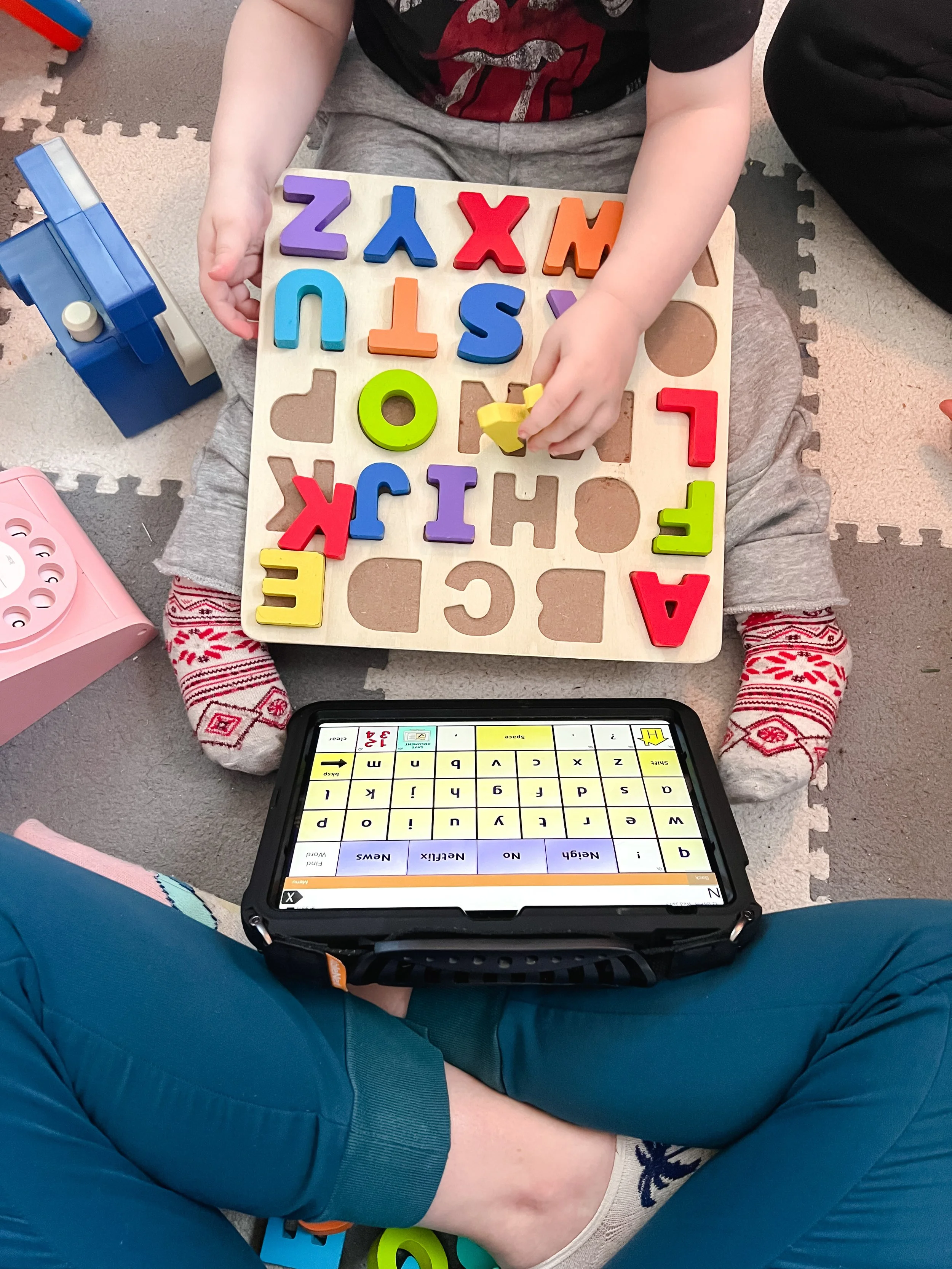
If you haven’t read my previous blog post about AAC (Augmentative and Alternative Communication), check it out here!
Having your child receive an AAC device can be overwhelming.
How do I use this thing?
Where’s the button for hot dogs?
Why are there so many icons?
Why does my child keeping pushing the same button over and over and over again?!?
I’m here to break down some of the key pieces for when you first get an AAC device. Here’s the thing: we’re not trying to learn where every icon is during the first week. Let’s set ourselves some reasonable goals and get set up for success.
Step 1: Get to know the device gradually!
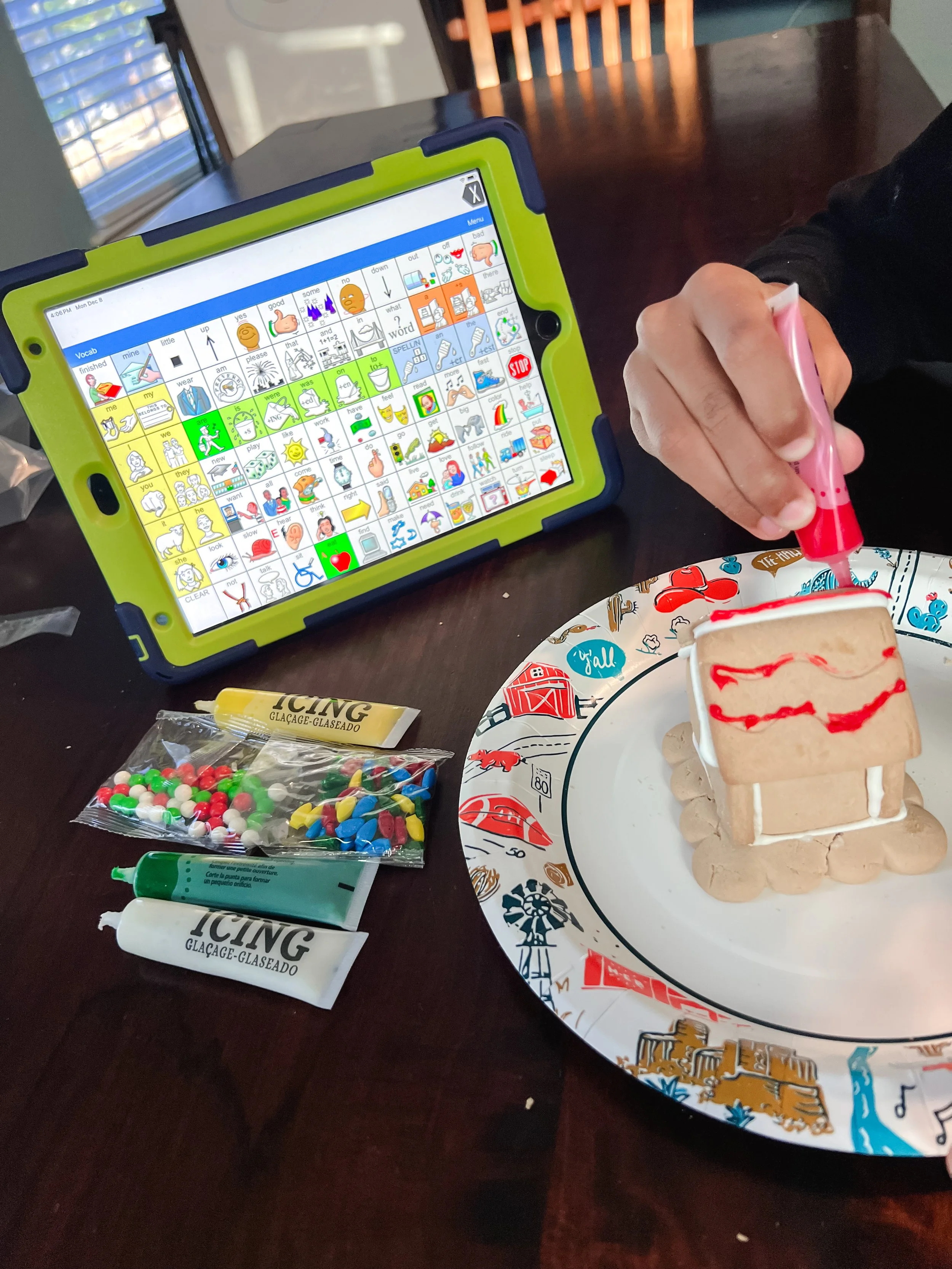
Familiarize yourself with the device when your child is asleep or not using it. This means going through different folders and figuring out where some of their favorite words might be hiding. Once you find a specific word that you think your child would want to use frequently, go through the motions of finding it multiple times in a row. This helps you remember where this icon is!
Get to know the icons/vocabulary on the very first page of your child’s device. For each child, this is going to verify drastically based on how their device is set up. Hopefully there’s some words like “go”, “want”, “no”, “more”, “stop” or “all done”.
These are called core words and they’re helpful because they can be used across a variety of activities.
Step 2: Model without expectation!
Here’s what modeling without expectation is NOT → you see your child wants the fridge open, so you bring over their device and say “Look, here’s the word open. If you press open, we can open the fridge”. Nope.
Model without expectation means that you see your child headed towards the fridge and trying to open it. You grab their device and press the icon for “open”, while saying “looks like you want the fridge OPEN! Let’s OPEN the fridge”!
In this scenario, you might go on to model “looks like you want something to EAT or DRINK!”. Again, this is going to depend on how your child’s device is set up. There’s no expectation that your child responds by pressing this button. If they do, excited and joyful responses. Perhaps you notice a head nod or eye contact as you model, this indicating to them that they might agree with what you’ve modeled. This is another great time to acknowledge for them “Yes!! Let’s find something to EAT!”.
Modeling without expectation can also occur as you build a tower and knock it down - modeling OH NO as you know the tower down.
Maybe it’s modeling “SHOES” and “CAR” as you get ready to drive to the park.
Maybe it’s modeling “I LIKE IT!” or “I DONT LIKE IT!” as they engage in an activity or watch a show!
The key here is that the adult communication partner is using the device to activate to vocabulary with no expectation that the child uses the device themselves.
Step 3: Keep it charged and in close proximity.
Any device is going to be more likely to be used if it’s within reach! Think about how many times you’ve been like “oh I need to do XYZ” but an item needed to complete that task is in another room, in your car, or in your bag. Makes it less likely that you’re going to complete that task, right?
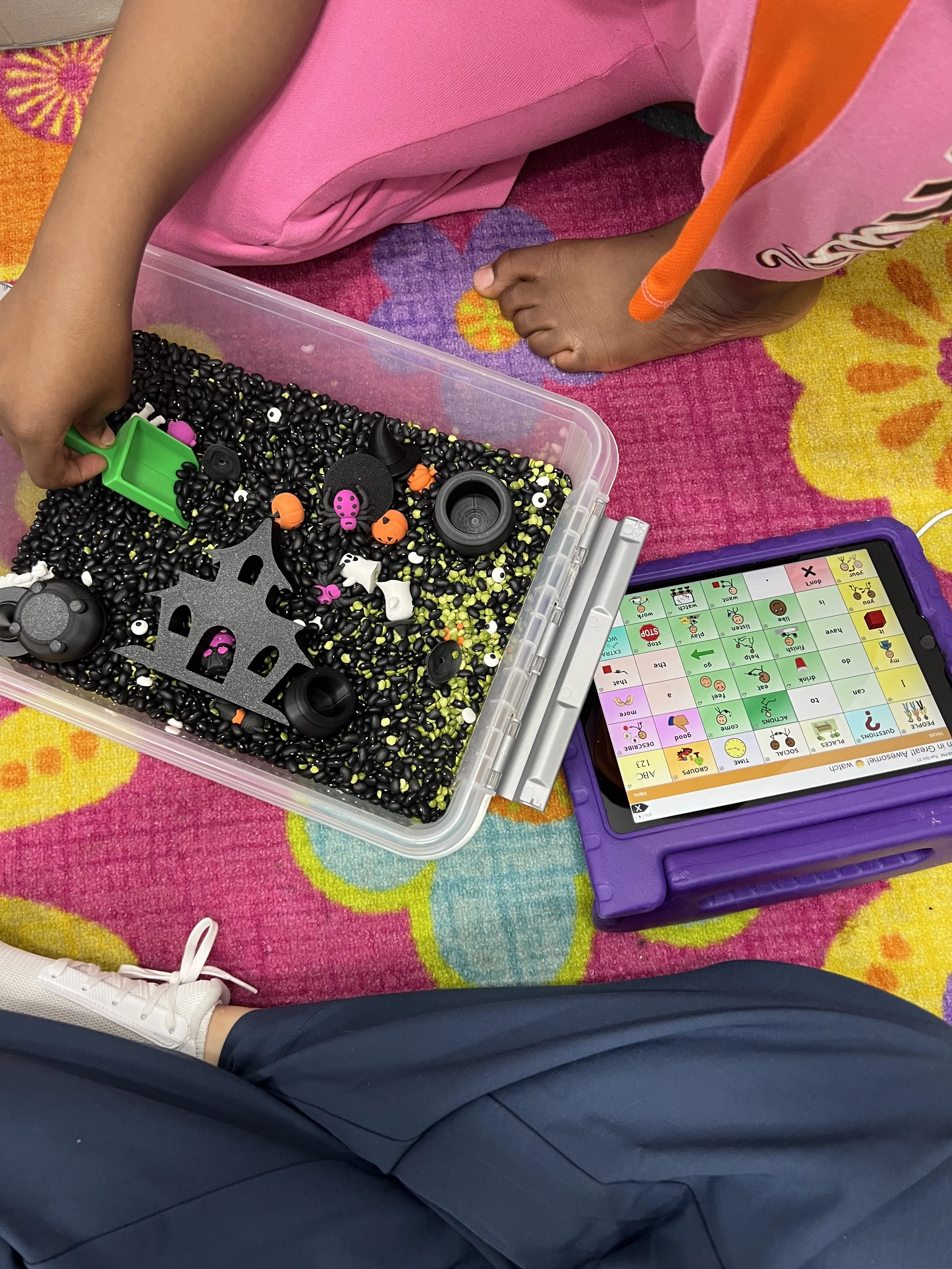
Your child’s AAC device is the same way! One key to them using it is to make sure it’s in close proximity. If they’re in the living room, it’s in the living room. If they’re on the floor, it’s on the floor. If they’re at the dining room table, it’s on the dining room table.
Initially, parents or caregivers might need to help with this and then gradually, as your child learns the power of their device, you’ll find them really taking ownership of it themselves.
Next steps…
If you’re feeling overwhelmed with your child’s AAC device, be patient with yourself and your child. There’s a big learning curve with high-tech AAC, especially. If you feel like you’d benefit from additional support, reach out to your child’s speech language pathologist or schedule a consultation with Olivia by e-mailing her at hello@wherelanguageblooms.com.